7 Practical Gains from a Laser Cutter Fume Extractor for Workshop Health
Introduction
I remember the first time I watched a small fabrication shop run a late-night laser job—acrylic smoke filling the corner, someone waving a shop towel like it would help. In that scene, the difference between a noisy workshop and a safe one often comes down to a single device: a laser cutter fume extractor. (You can see the problem clearly: visible smoke, a sore throat the next morning.) Recent workplace studies show elevated VOCs and fine particulates near cutting stations—data that should make any maker pause. So I ask: how do we move beyond band-aid fixes and build systems that actually protect people and processes? This piece will map the gaps I see and suggest practical steps forward, blending technical points with things you can try in a week or two. Let’s begin with where common approaches go wrong and why that matters for your team and your bottom line.
Where Common Solutions Fall Short
fume extractor laser cutter units are sold as the cure-all for smoke, but many installations leave critical risks unaddressed. I’ve inspected systems that had good intentions—inline fans, basic filtration—and still let particulate matter (PM2.5) and VOCs circulate. The reasons are layered: undersized airflow, incorrect filter media, poor hood capture, and faulty sealing. These faults multiply. For example, a small fan matched to the wrong duct length reduces capture velocity; filters rated only for dust won’t trap ultrafine particles or absorb organic fumes. That combo creates exposure despite the machine running.
Why do filters and layouts fail?
Look, it’s simpler than you think: designers focus on a single spec (like fan CFM) and ignore real-world dynamics—turbulence, heat plumes, and operator movement. HEPA filter efficiency matters for particulates, while activated carbon is needed for adsorption of VOCs; choose one without the other and you still have problems. Add in maintenance gaps—clogged pre-filters, delayed cartridge swaps—and performance drops further. I’ve seen systems where the control panel reports “good” but the measured VOC level at breathing height is still high. In short: basic metrics alone don’t guarantee safety. We must consider hood geometry, capture velocity, filtration stages, and scheduled maintenance together, not in isolation.
New Principles and Next Steps
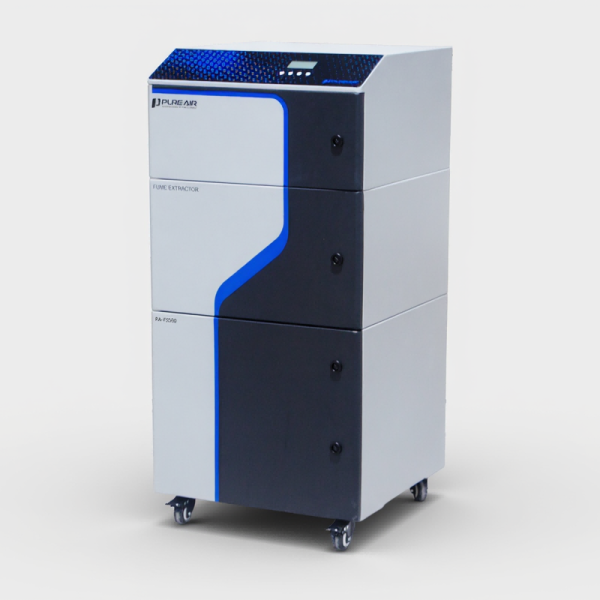
Moving forward, I advocate for three design principles that change outcomes: integrated capture, staged filtration, and measurable feedback. Integrated capture means the hood and local airflow are designed around operator tasks, not retrofitted afterward. Staged filtration pairs a durable pre-filter, a HEPA stage for particulates, and activated carbon or specialized sorbents for VOCs. Measurable feedback—real-time VOC sensors and differential pressure gauges—lets us see when performance falls off. Together these elements form a system that adapts rather than pretends to perform.
fume extractor laser cutter advances now include smarter controls: variable-speed blowers that match cutting power, modular filter cartridges for easy swaps, and compact sensor nodes that report air quality to a dashboard. I believe these trends lower long-term cost and raise worker confidence (— funny how that works, right?). For facilities thinking ahead, start with a simple audit: measure current capture velocity and VOC baseline, then pilot a staged filter unit and one inline sensor for a month. That experiment will show real gains fast.
What’s Next?
I’ll leave you with three practical evaluation metrics I use when selecting or upgrading systems: 1) Capture effectiveness at the operator position (measured velocity in feet per minute), 2) Filter life and multi-stage composition (HEPA + activated carbon), and 3) Real-time monitoring capability (VOC sensor plus differential pressure). Use these to compare options side-by-side. When I advise shops, we score each candidate on those three and favor the one with lower operational risk, not just lower purchase price. In my experience, that approach pays off in fewer health complaints, less downtime, and clearer compliance paths.
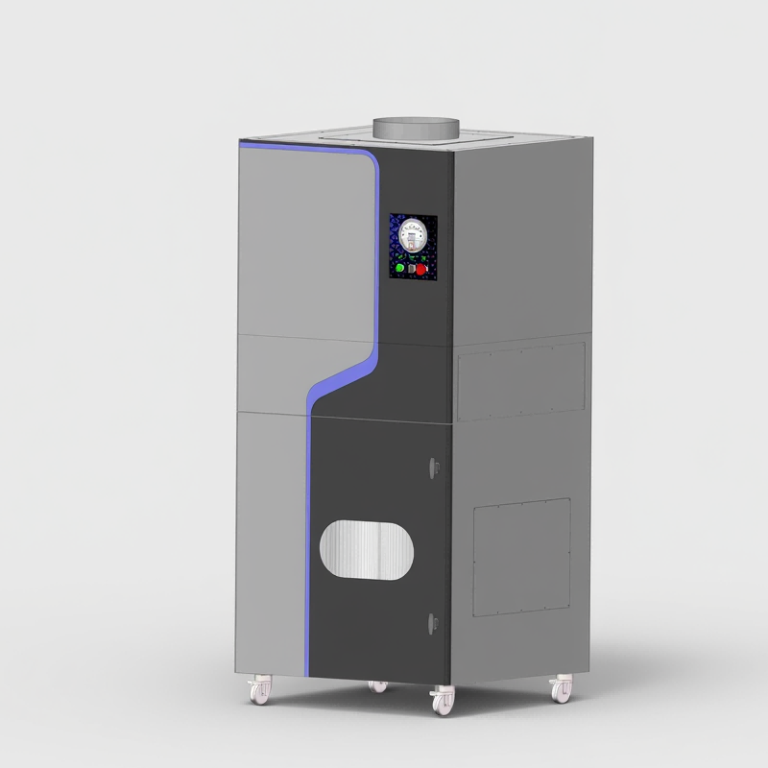 For those ready to move from fixes to robust solutions, consider a provider that combines tested filtration stages with monitoring and service plans. I’ve worked with teams who made the switch and saw measurable drops in PM2.5 and VOC readings within weeks. If you want a starting point, check the product lines and service options from PURE-AIR—they often align with the metrics I’ve outlined and can help you set practical targets. We can make workshops safer without overcomplicating the process. Really—small changes, big returns.